
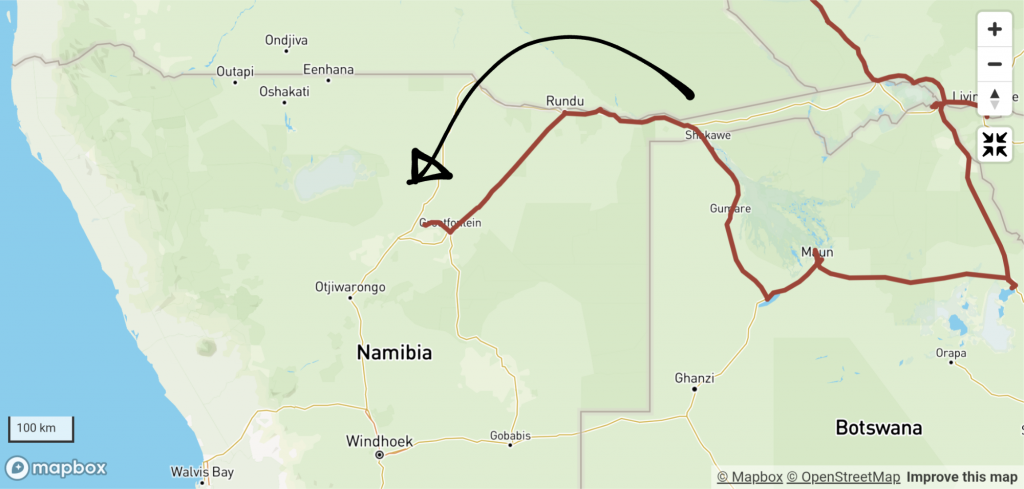
We have timed our arrival at the Namibian border perfectly. Two tour busses – one with middle aged Germans, one with young Commonwealth whipper snappers – are arriving at the same time and lining up just in front of us. We wait patiently for half an hour to then be told that we should have printed our visa beforehand. After much eye rolling and faffing about on our part we finally get our stamps for the penultimate country of the trip.
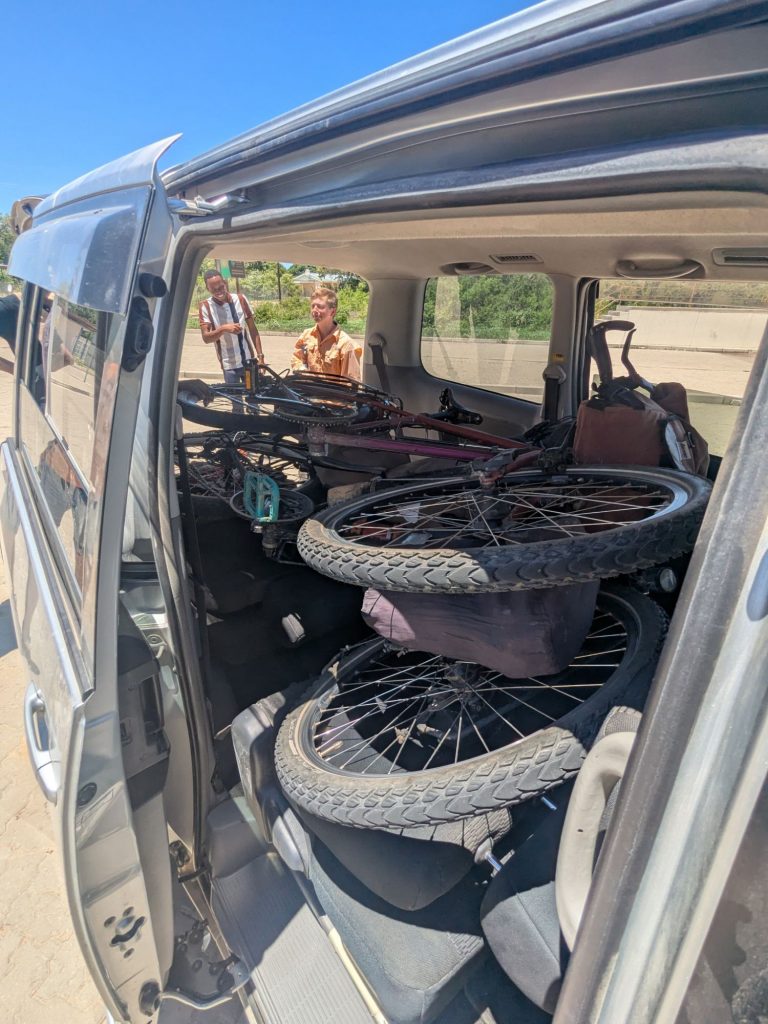
We then spend our last Botswanan pula on a taxi ride across 15km of national park. As is often the case, we aren’t allowed to cycle through it. If we were in east Africa the little minivan would have accommodated us, the two bikes, all our luggage, 6 more people and their luggage plus a few chickens and a sofa on the roof. But we’re in southern Africa now and only two additional passengers clamber in beside us.
We spend our first night in a local guesthouse. Everyone is very nice and friendly, but – as in Botswana – keeps their distance from the weird white people on bikes. The owner politely tells us that there will be a little party later on. We fear the worst yet are positively surprised by the civil, almost Swiss-like noise levels. The next morning we go shopping at a well stocked supermarket. This is another striking difference to the corner shops of east Africa.
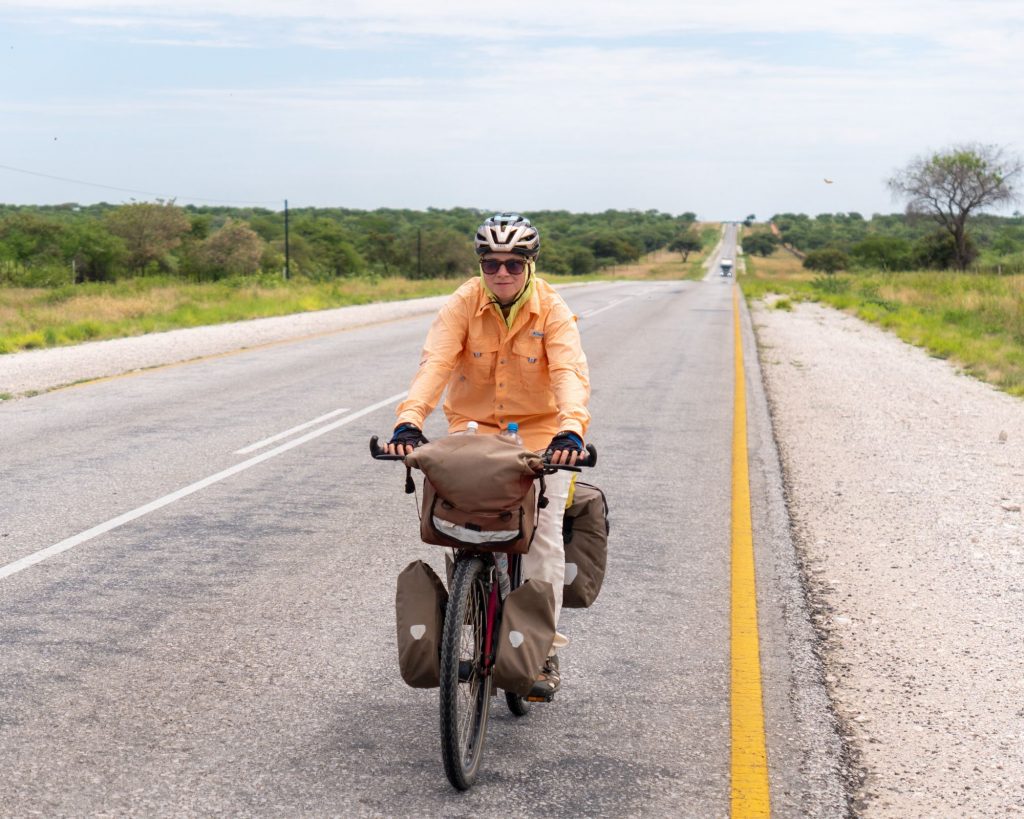
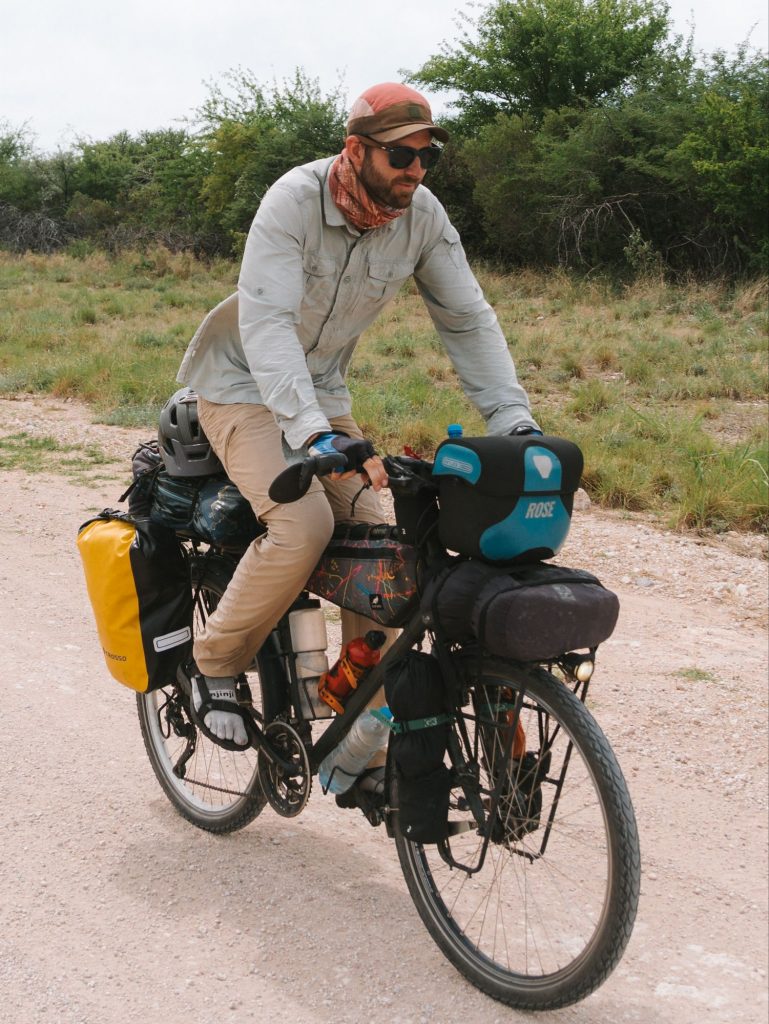
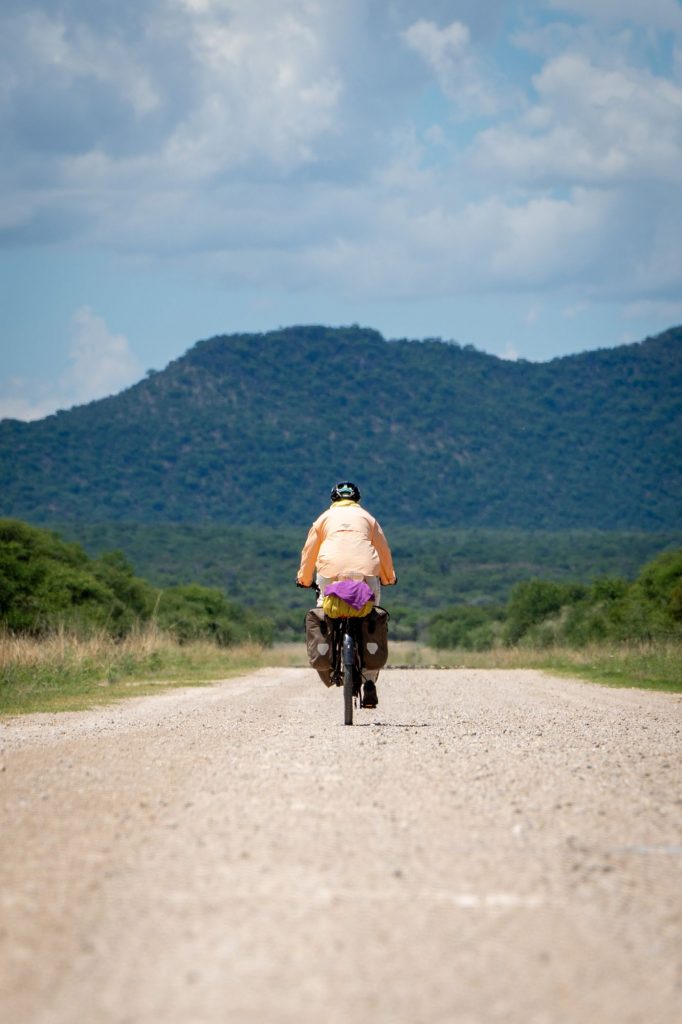
One of the first questions people ask about our trip is how many kilometers we are doing in a day. This is notoriously difficult to answer, since it depends on too many factors: what road surface is it; where is the wind coming from; is it hilly or flat; how sluggish are we feeling and so forth. Any variation – however slight – in one of these can massively mess with the average pace and consequently our mood. These first days in Namibia are harder than expected.
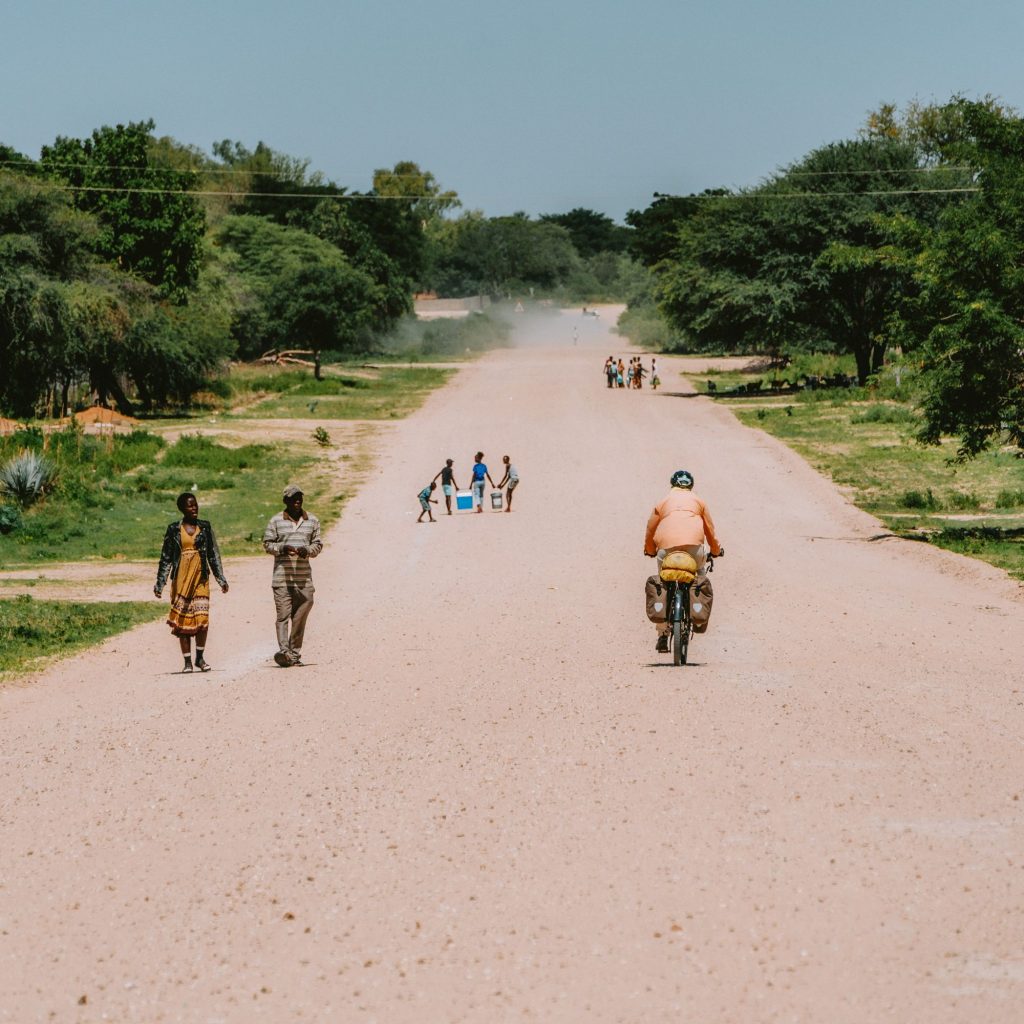
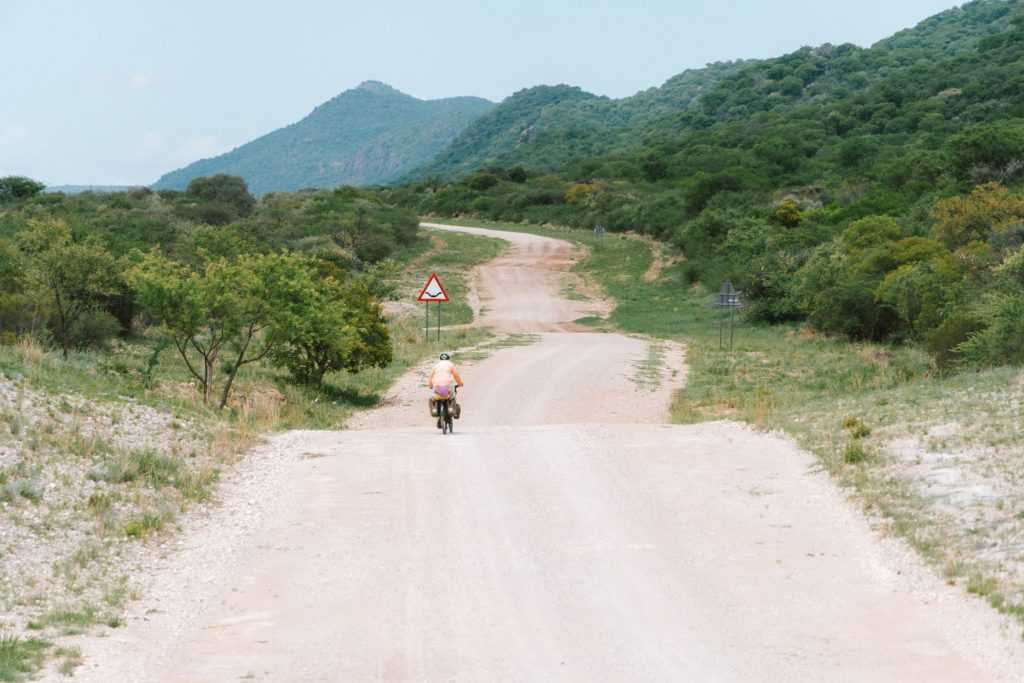
To begin with we are defeated by a sandy gravel road and have to backtrack. Then there are these weird things called “hills” that we haven’t seen since September. Finally the headwind drains us of all energy. We pass through village after village on a straightforwardly boring road. The locals often cut down all the trees around their houses, apparently to make the area less attractive for snakes. We debate the risks of dying from snake bites versus heatstroke while the sun beats down on us and the people on their barren plots of land.
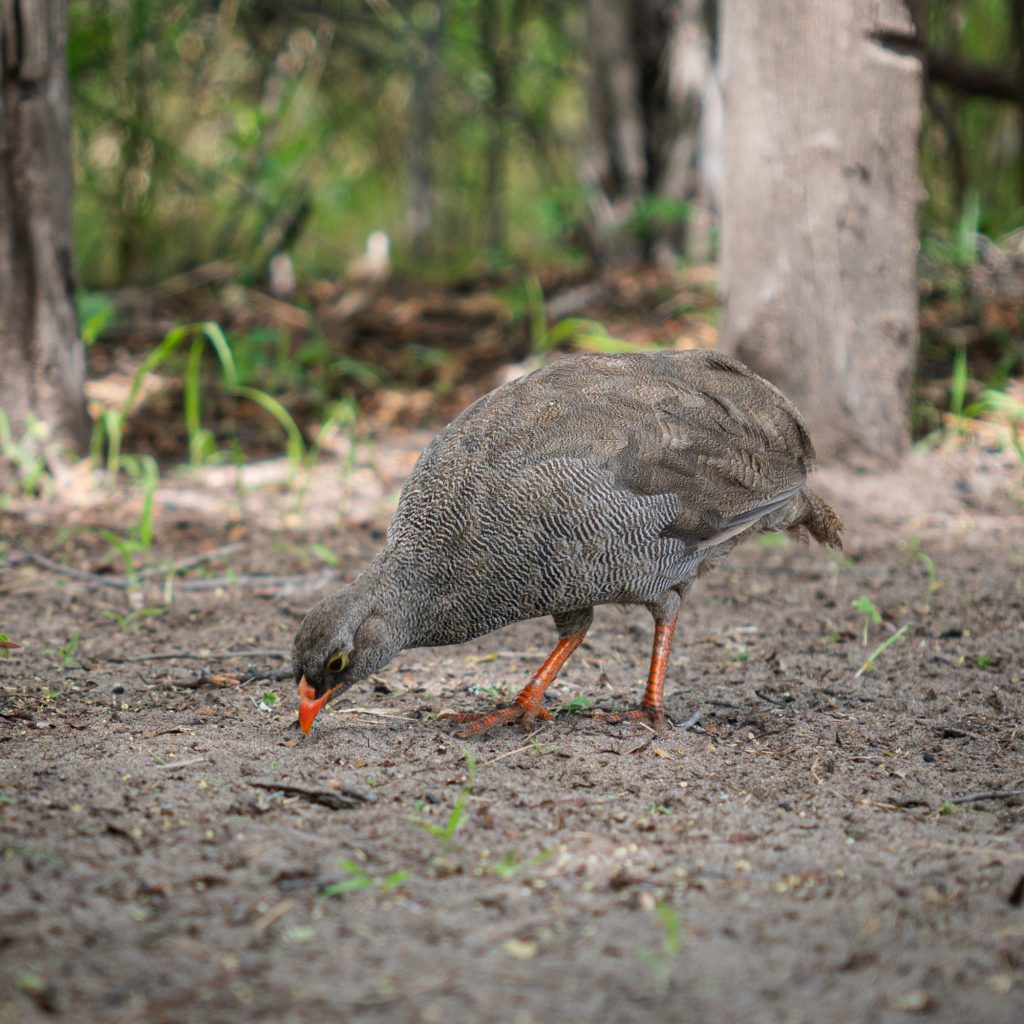
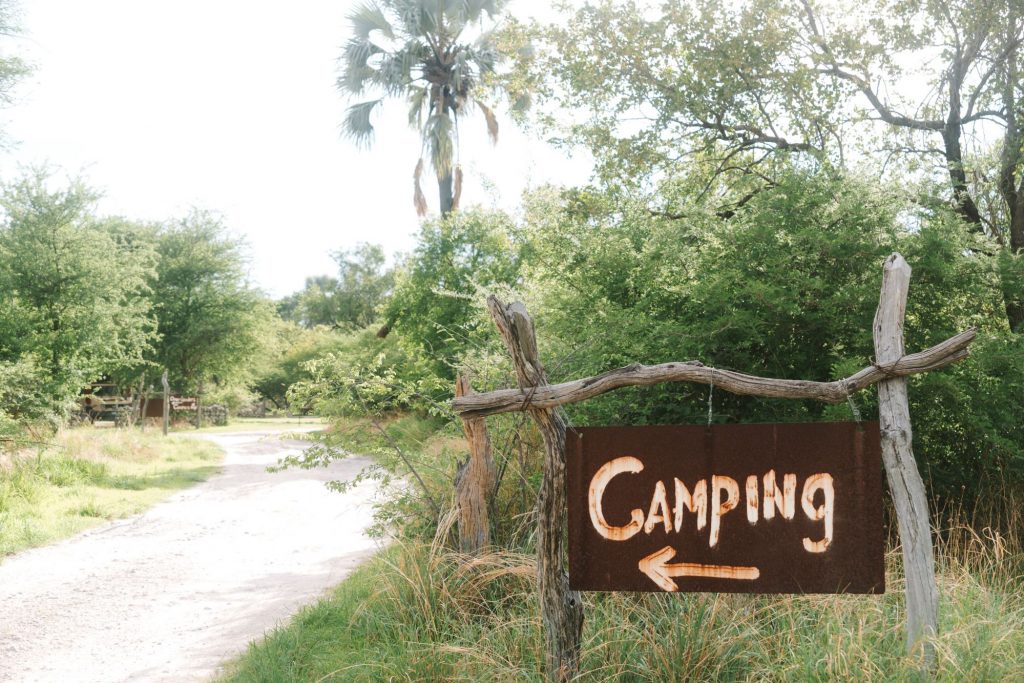
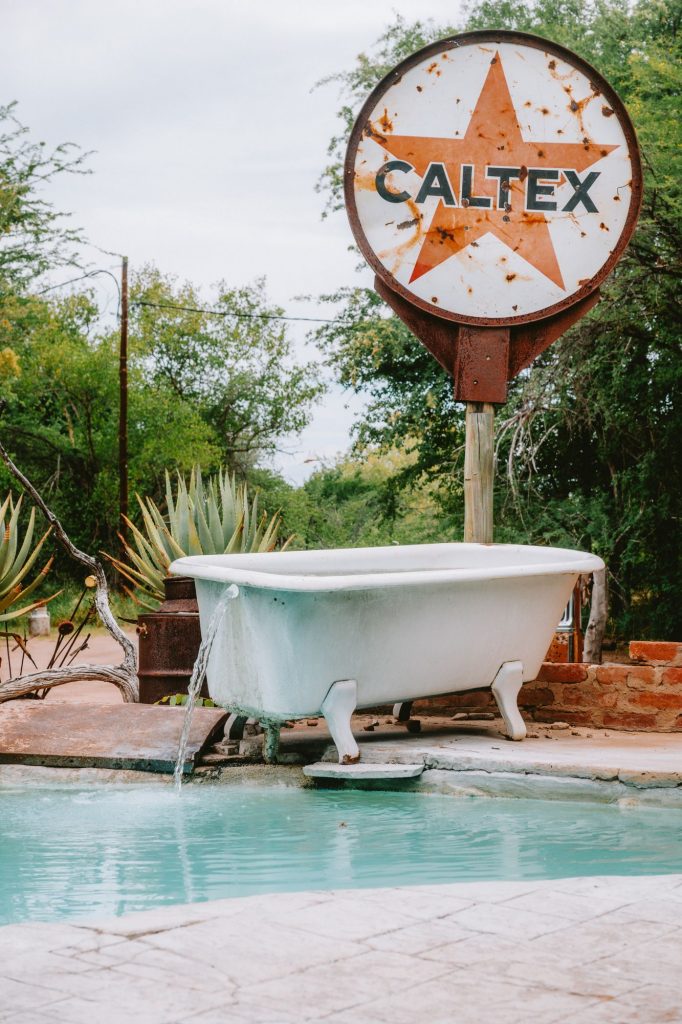
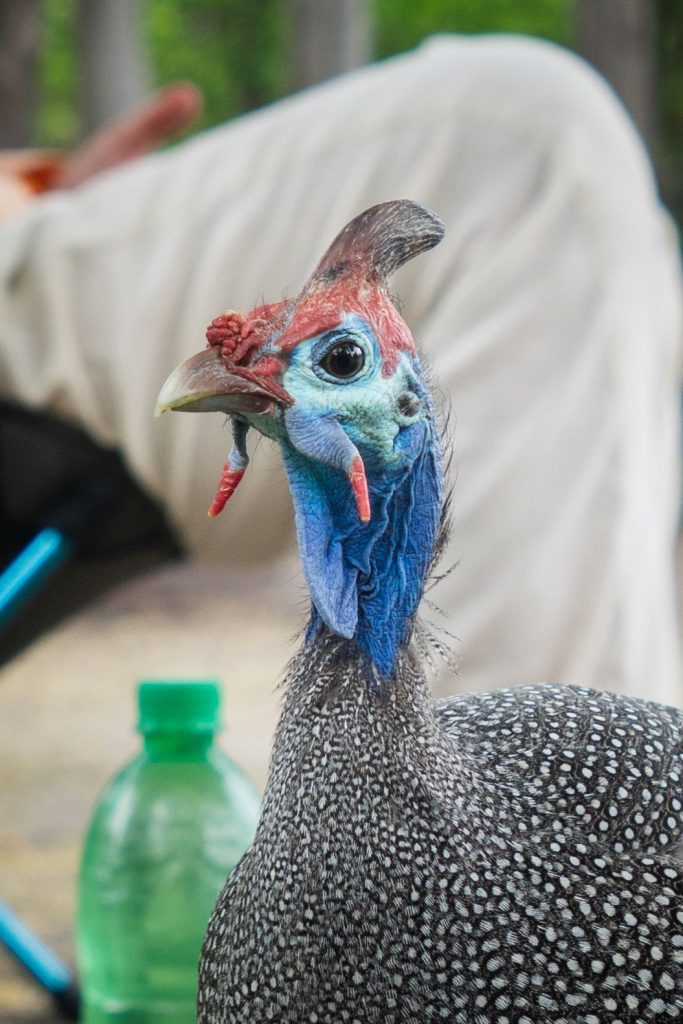
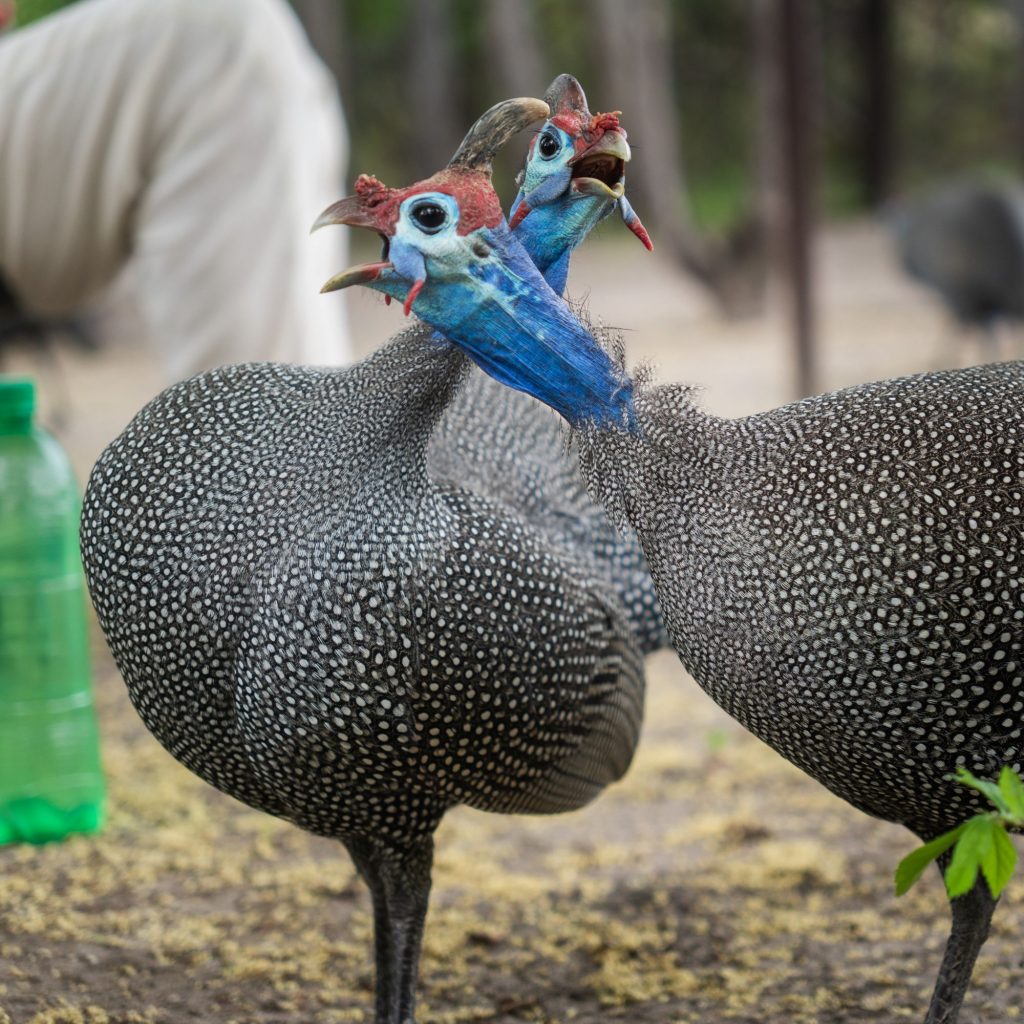
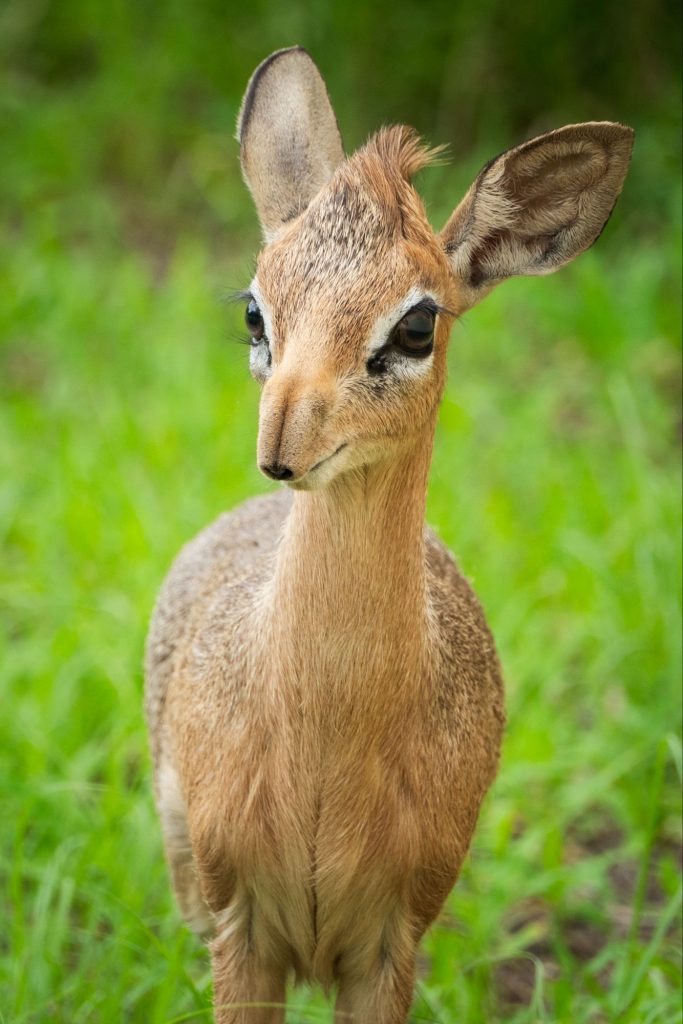
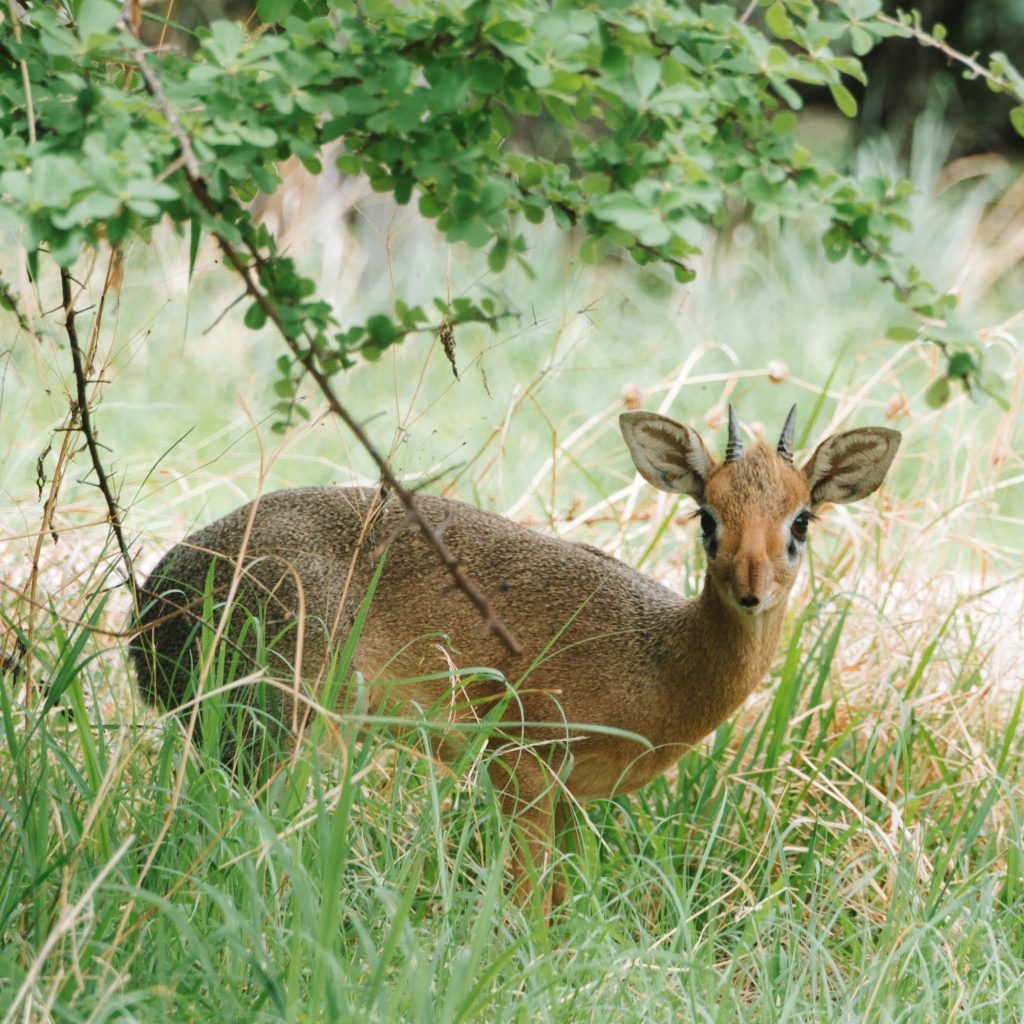
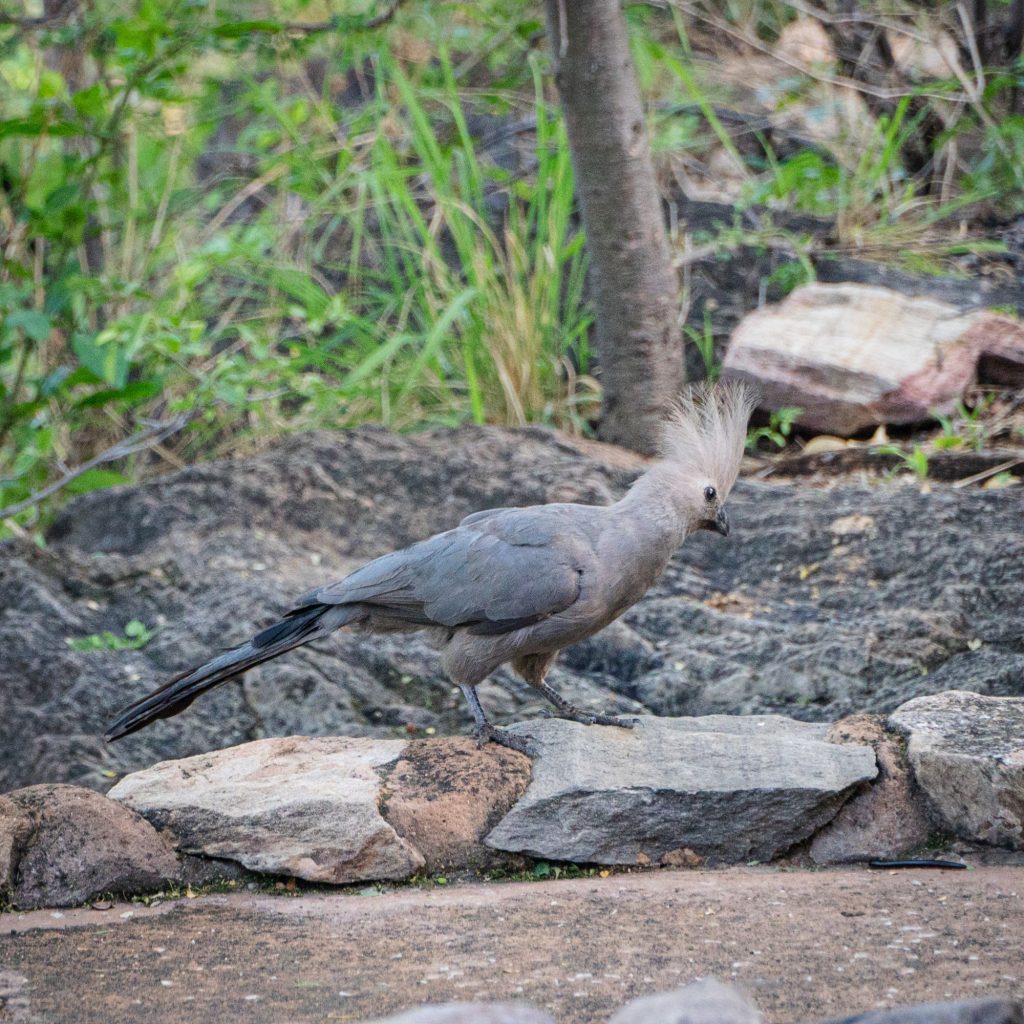
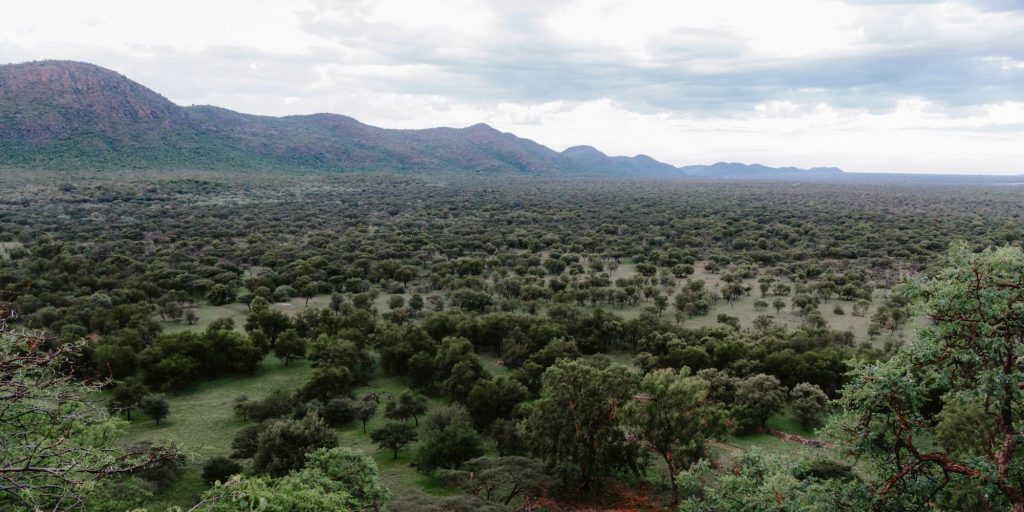
But as always the boredom doesn’t last long. We stay a night at a community clinic where we shower in the delivery room and get a free lesson in family planning. During the course of the next day the villages slowly peter out and are replaced by vast fields and green hills with rocky outcroppings. Palm trees and cacti join the acacia trees giving the area a distinctive Mediterranean feel. At a nice bush campsite we spot the tamest guinea fowl we’ve ever seen, as well as spur fowl, rabbits and too cute to be true dik diks (mini antelope with a little snout).
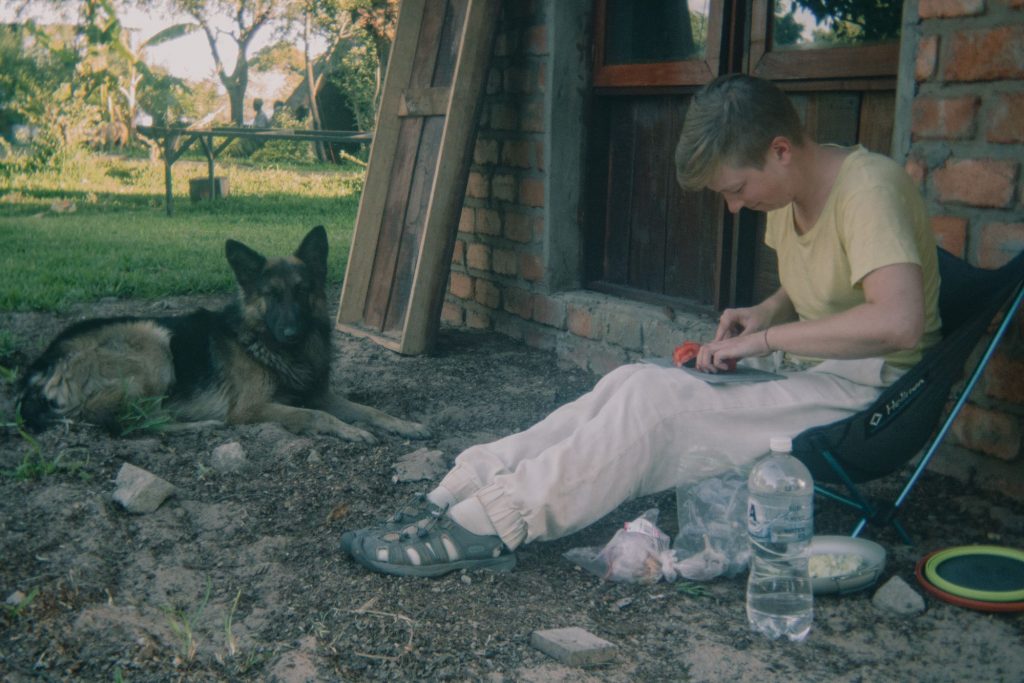
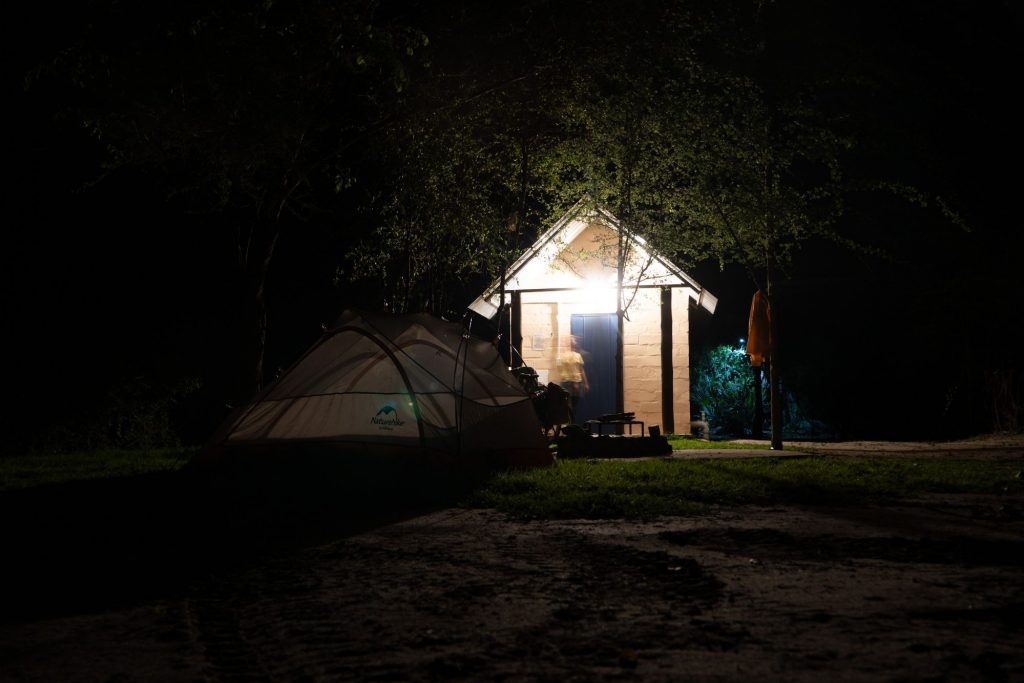
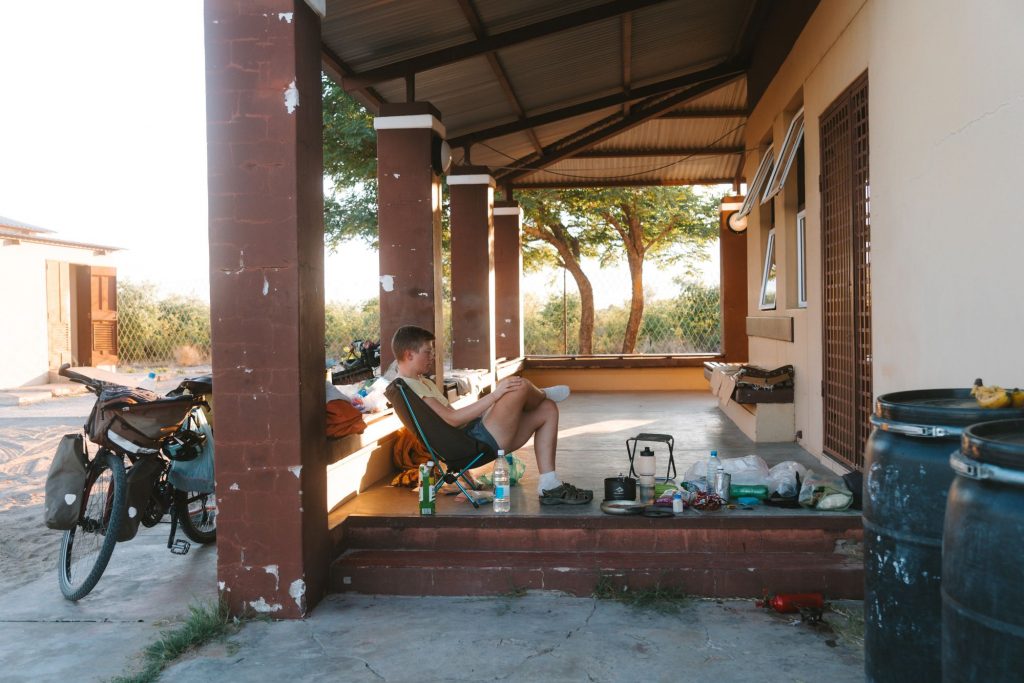
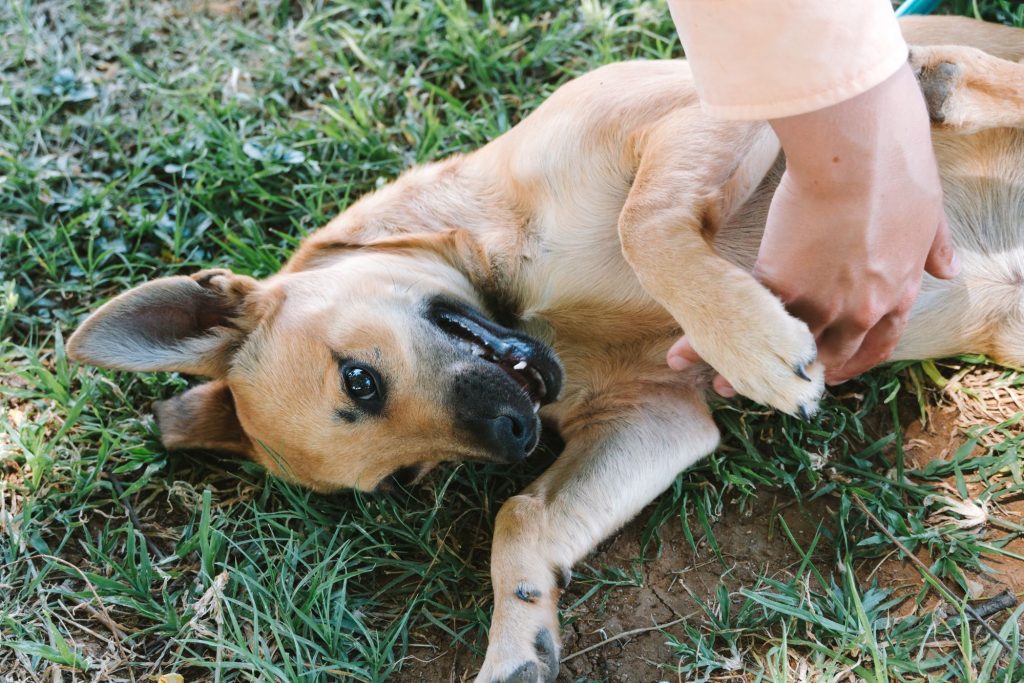
At Bambi lodge we make friends with a little puppy which we shall call Needy. She follows us everywhere dragging behind her a flap of cow skin and assorted innards. At night she cuddles up to the tent and nibbles at her juicy snacks. Every now and then she jolts us awake by growling at nothing in particular. In the morning the owner Felix pulls us aside to have a chat. He begins like this: “The [black] people here are very good people, but they are really fucking stupid!” Well… what do you reply to that?
Felix then spends half an hour ranting about how the government deliberately keeps people uneducated to stay in power, how the poor drink and gamble away their paychecks and how he can’t get his employees to pick up litter around the lodge no matter what he tries. It’s not the first time that we get this sort of rough-and-ready introduction to a country by a white native. It’s always cynical, often a little racist (usually openly so) and generally without any prompt on our part.
It’s very easy to condemn the harsh words and leave it at that. Yet below all the swearing and jadedness we also always sense good intentions. People like Felix freely acknowledge the difficulties in working with people from different backgrounds. He still very much cares about them. He gives them jobs, helps them enroll in vocational training school and sends them to his doctor if they are seriously ill. In his way he does more for the people around him than any outsider pointing fingers at his lack of political correctness.
When we say that we need to get going to our next campsite (a farm with rhinos) he sends us off with a tale about how he used to shoot rhinos from a helicopter in Angola when he was in the army. The officers would then sell the ivory to make some money on the side. While he returns to nursing his hangover, we start pedaling and mentally add another “character” to the growing list.
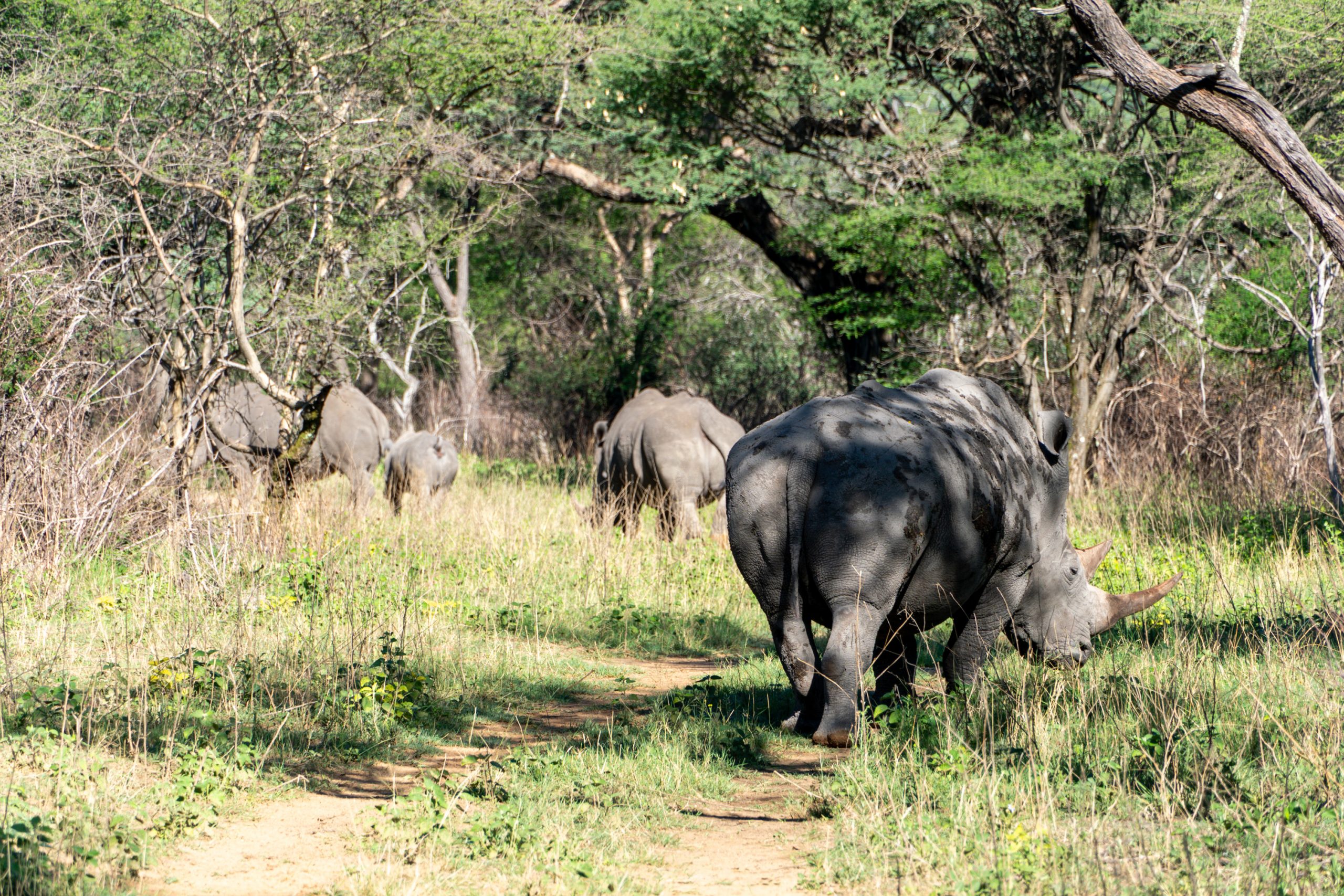
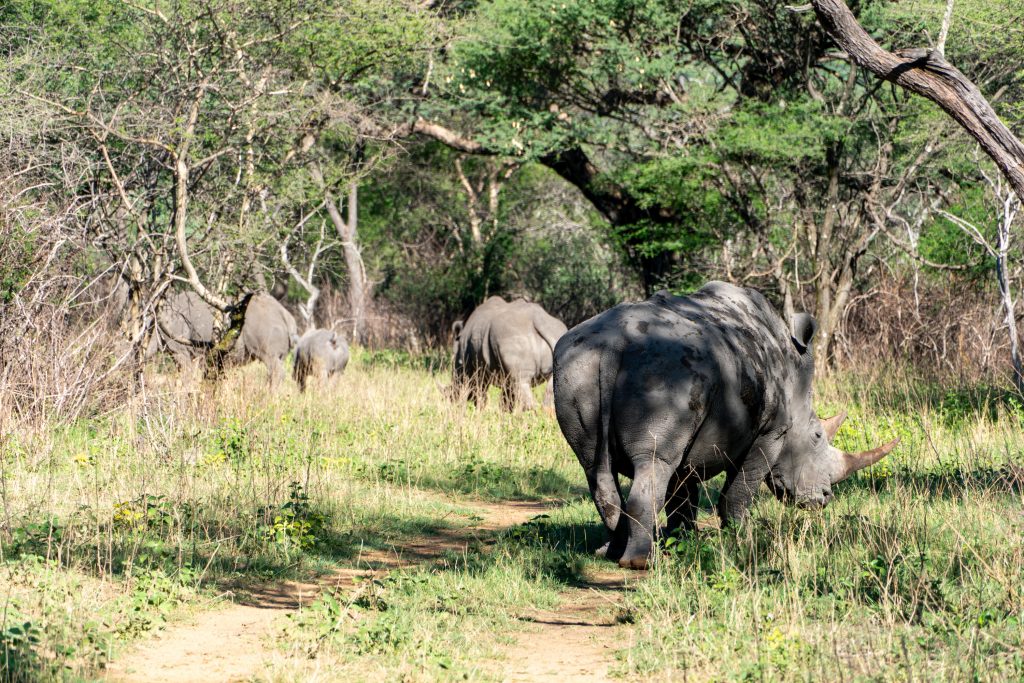
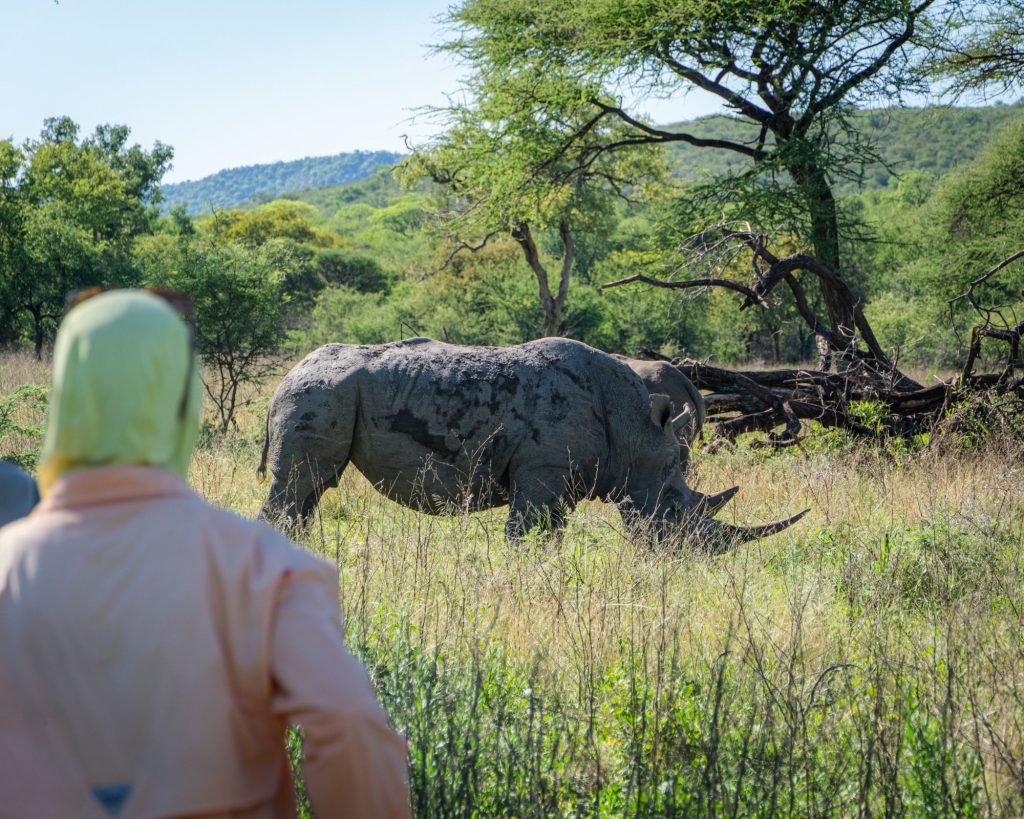
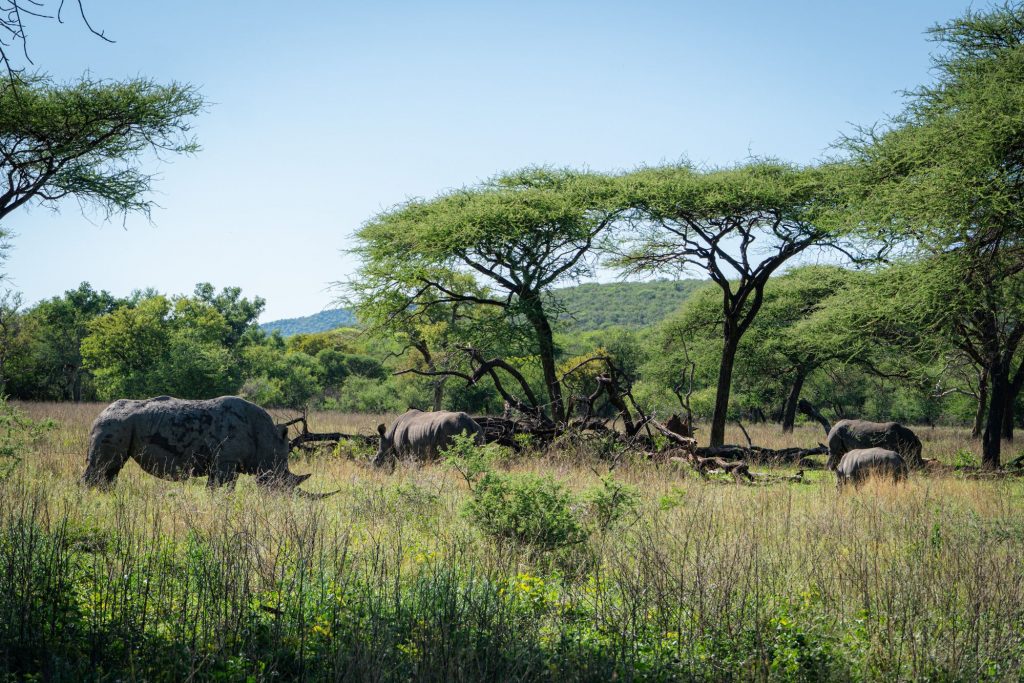
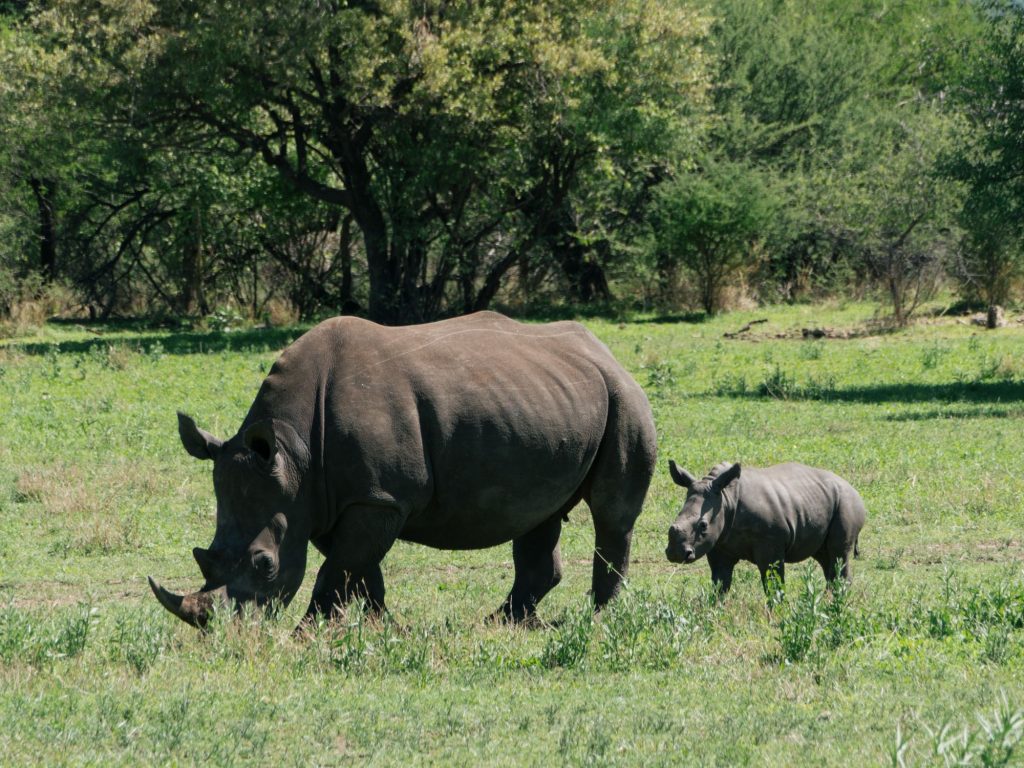
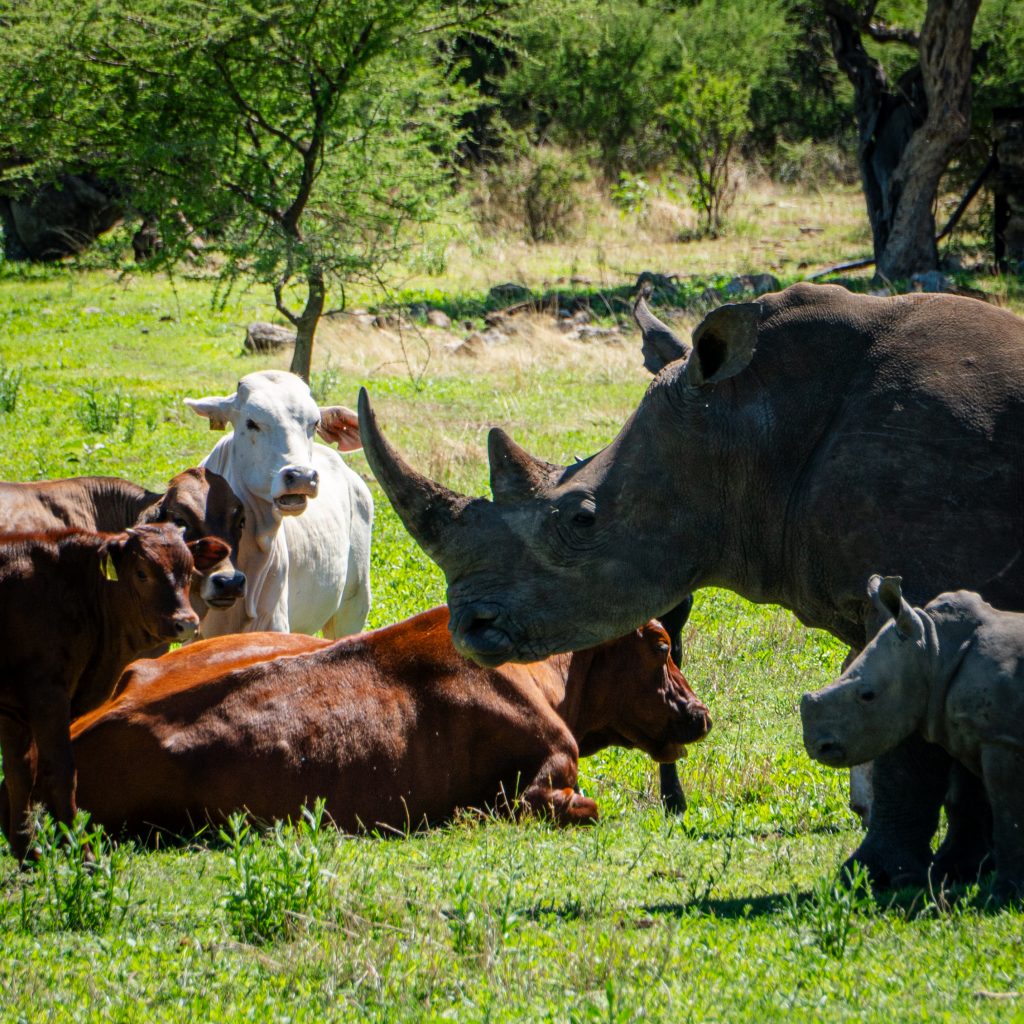
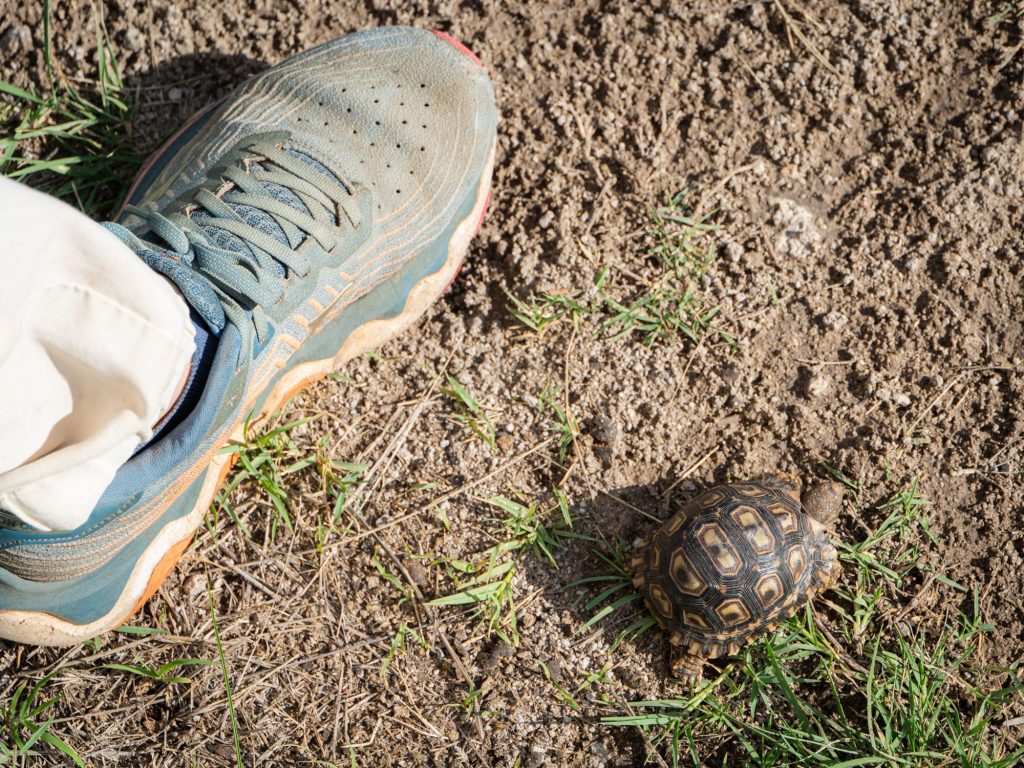
As we head into the hills on a beautifully graded gravel road the excitement is palpable. We are booked in at a fancy camp for two nights and one guided walk. It’s an early Christmas present to ourselves and we enjoy it to the fullest. Since there are no predators around the farm we can walk around freely, spotting warthogs, waterbuck, impala, eland and even tortoises. We follow the resident rhinos around for hours. One of them is also called Lina and has a two month old baby. The resemblance is quite striking.
We’re very thankful that these beautiful animals are now well protected from poachers. Like most animals in Africa they are quite the feat of evolution. Weighing up to 2.5 tons they might just be the heaviest unicorns we’ve ever seen.
So glad you got the camera replaced! Gorgeous photos and I LOVE the baby rhino❤️