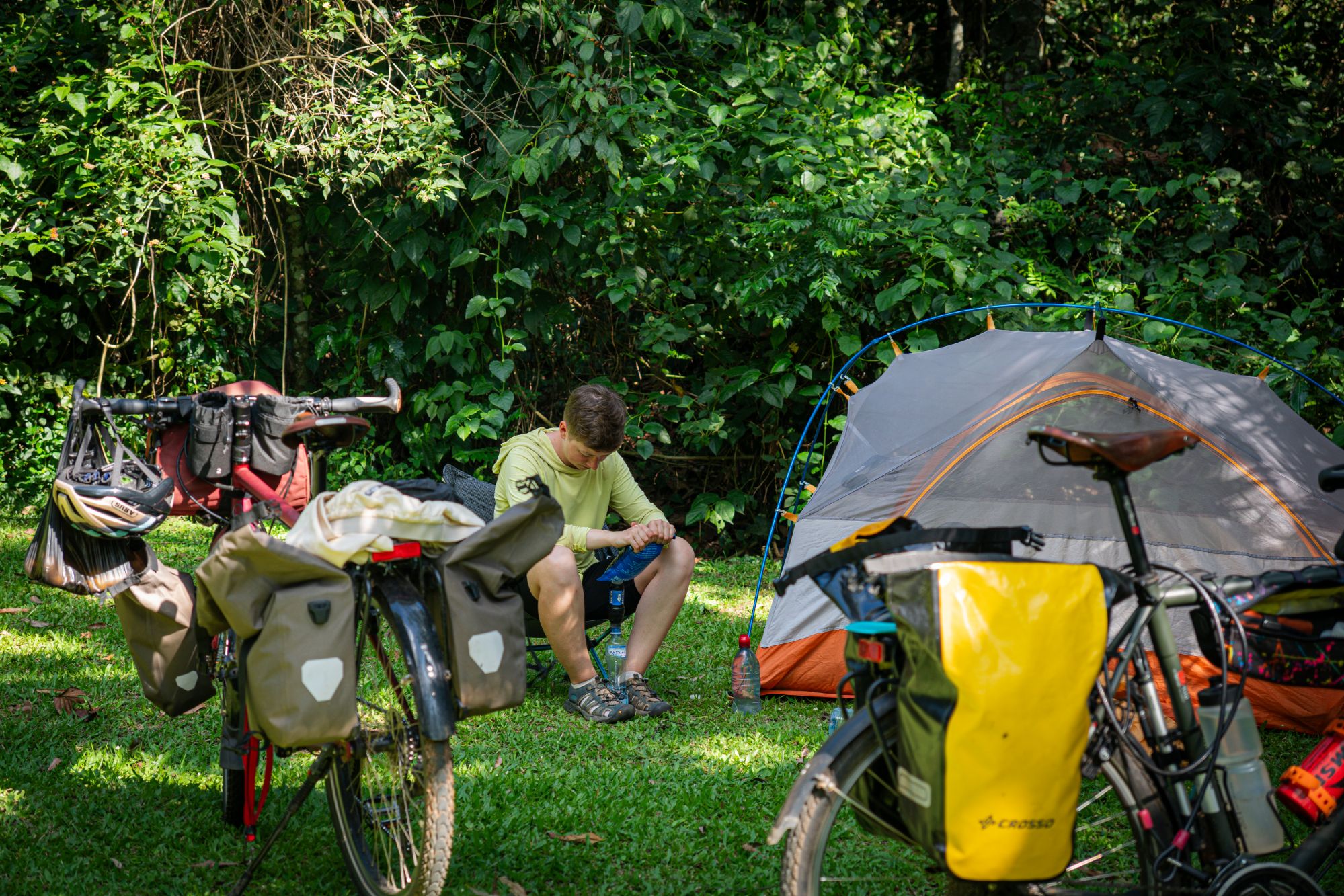

Before our trip I wrote an overview of some of our equipment decisions; now that we’re done I thought it might be interesting to one or two of you to look back on what gear choices were good, what we’d do differently and to see if after a year on the bikes we’ve learnt anything at all.
Bikes
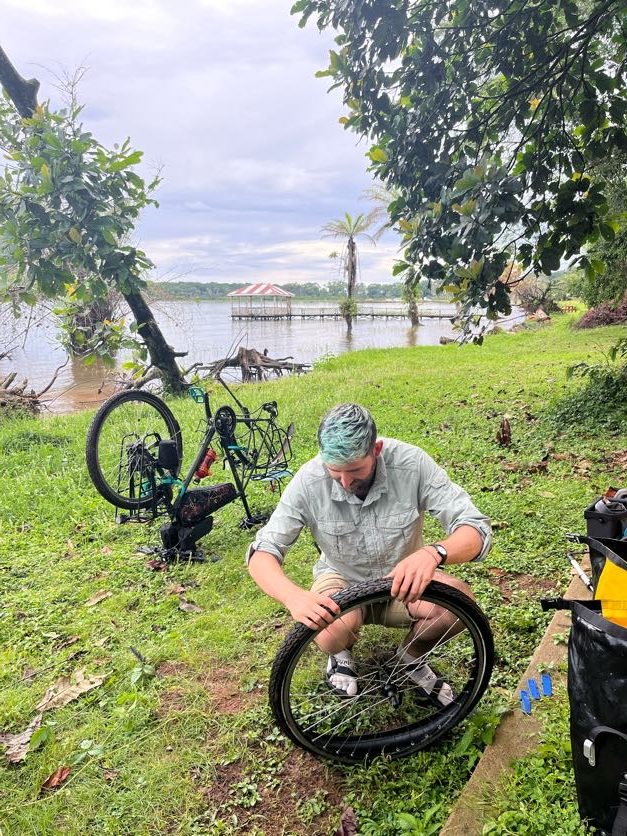
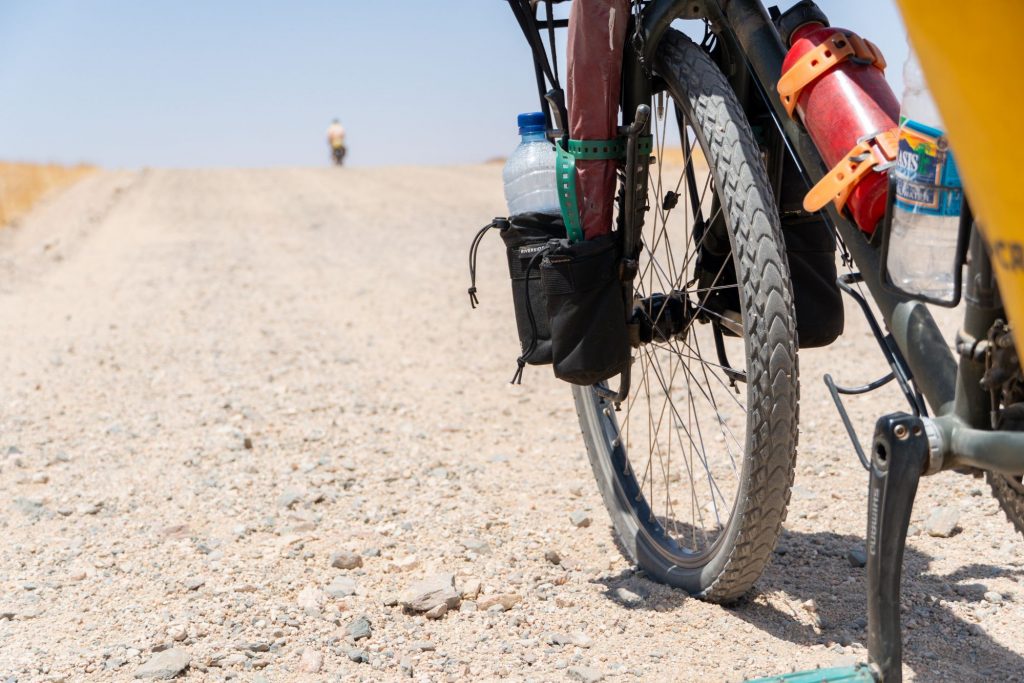
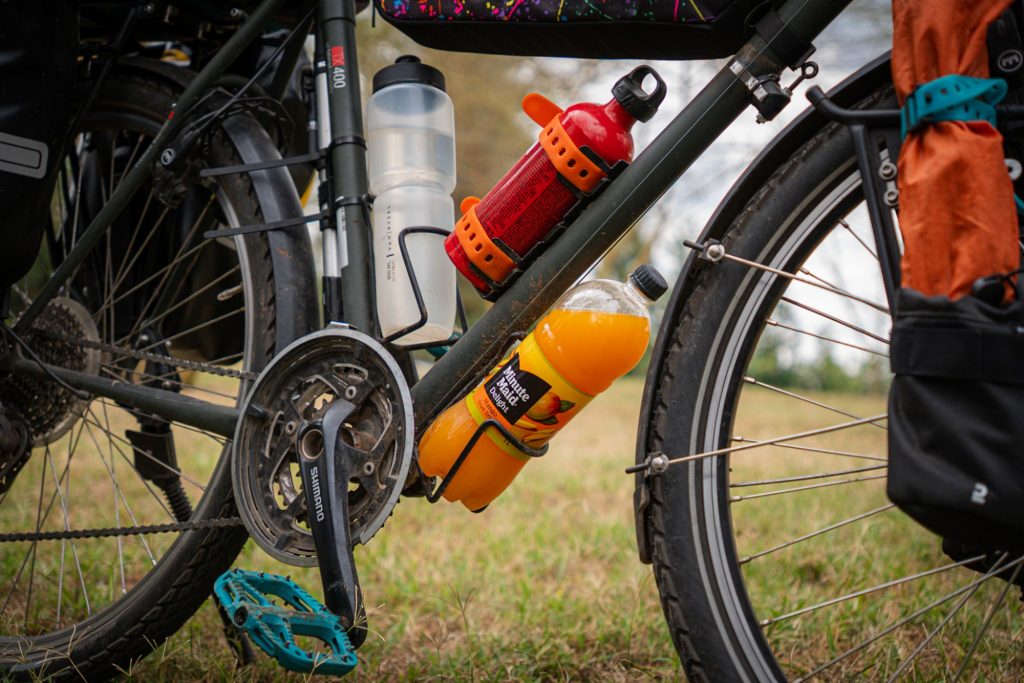
They may not have been the lightest of the fastest, but the bikes were strong and reliable. Africa can be quite tough on equipment, and that we got away with such minor issues that could be fairly easily resolved, I think, does them credit. Of the 30 “breakdowns” that we had, the overwhelming majority were just small inner tube punctures. We figured out very quickly (after the ordeal of Day 1) that it makes no sense to try and patch the tubes at the side of the road; throw a new (or at least airtight) one in and continue on, then patch the old one in a clean and comfortable environment. If we were buying for this trip again it would have been good to have tubeless-ready rims, but given that we had no experience with tubeless before, I feel like our choice wasn’t a bad one for us. We did also see a few tubeless mishaps, so it’s hard to know if we would have had more trouble or less.
So what else would we change about the bikes besides the tubelessness of the wheels? Larger wheels (both width and diameter) would have definitely been a plus. Small 26″ wheels are strong, but don’t roll as well over uneven surfaces, and 2″ width was okay, but larger air volume would’ve provided more cushioning on gravel roads. Extra suspension would definitely also have been appreciated, either with a front suspension fork or at least a suspension seat post. We really felt the bumps on unsealed roads and trails, and often shied away from more scenic routes than if we had had more off-road capable bikes.
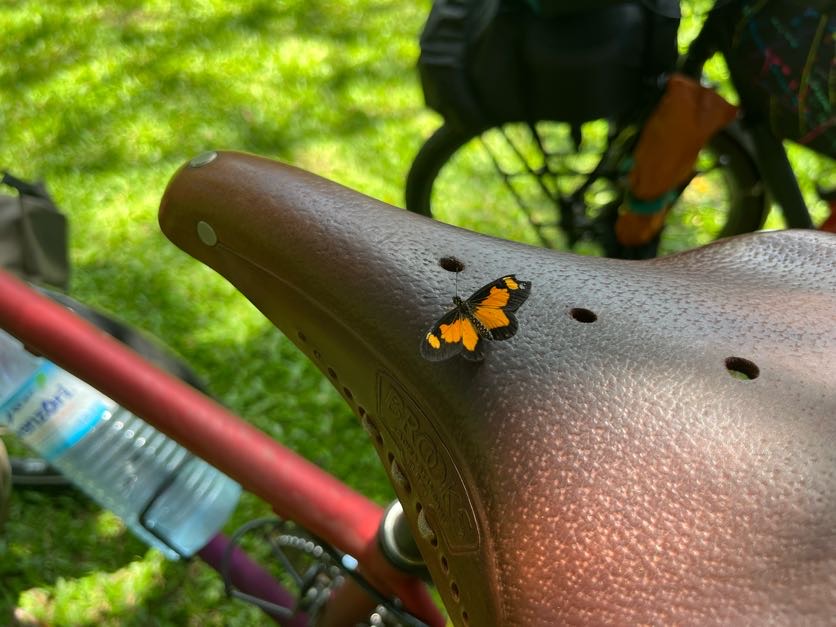
The leather saddles were a big winner. It was great that we didn’t feel the need for padded shorts, and only on the longer days did they become truly uncomfortable.
Some other surprises, our tyres (Schwalbe Marathon Mondial Evo) survived the whole trip, so including use before our trips that’s over 15,000km, the only exception being Ben’s rear tyre that got a tear in the sidewall after about 2000km. It turns out that you should probably inflate tyres to the pressure written on the side; who knew? We’d definitely buy the same again for a similar trip. We were also shocked at the variance in durability of our chains. Some lasted for only just over 1000km (Shimano chains, purchased in Switzerland) and others lasted 5700km (also Shimano chains, purchased in Malawi). Besides a little more rain in some sections, that may have lead to the chains picking up more grit, the difference is baffling to me. We cleaned them regularly, and used the same wax lube (Squirt, that we also highly recommend). Let us know if you have theories.
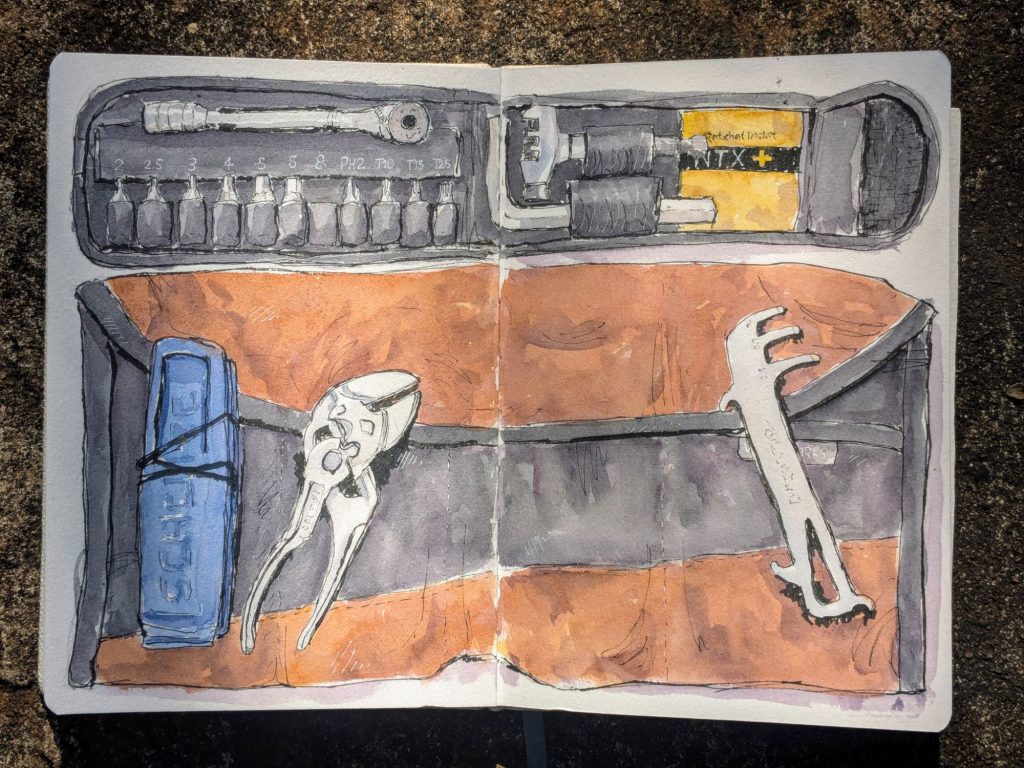
I’m going to pat myself on the back for what tools and spares we brought. It was a small kit, and did everything we were realistically going to attempt ourselves. Here is a more detailed post from before our trip, but the best things we took along: Topeak Ratchet Rocket for Allen keys and small Knipex wrench. These two covered about 90% of our uses.
Tent
We were very happy with our cheap and cheerful Chinese tent (Naturehike Star River 2). The African sun was very tough on it, and our first tent didn’t quite make it to the end, but thankfully we could replace it with the same model from Lina’s dad. I doubt whether a tent 2-3x the price would have been more durable, so we’d take the same again next time.
Stove + Cookware
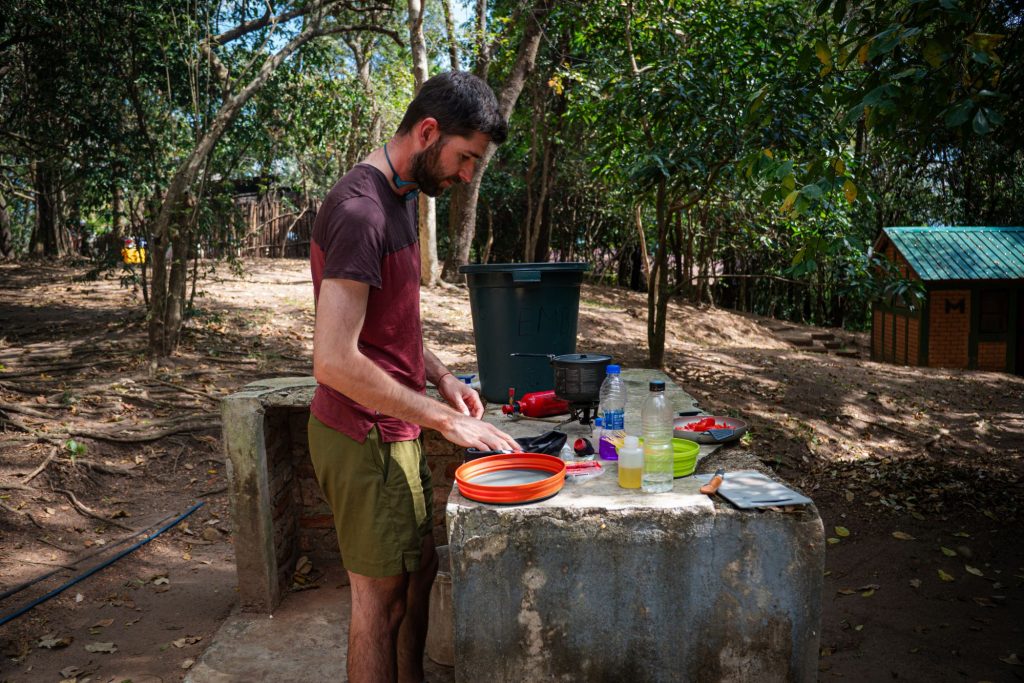
It was great to be able to cook with petrol on our MSR Whisperlite. They have a reputation for being dirty and getting caked in soot, but you can mitigate this to a large extent by priming the stove with methylated spirit, which could be found everywhere very cheaply. We took the full repair kit but didn’t use much of it in the end. We did one full disassembly and cleaning, but are unsure if that was really necessary.
Between a 2 litre pot and an 8″ frying pan we could just about cook meals big enough for the both of us. But since our stove only has one real setting (on), we couldn’t do much complicated cooking anyway. We generally stuck to one meal, pasta with tomato sauce and soy bits.
Water
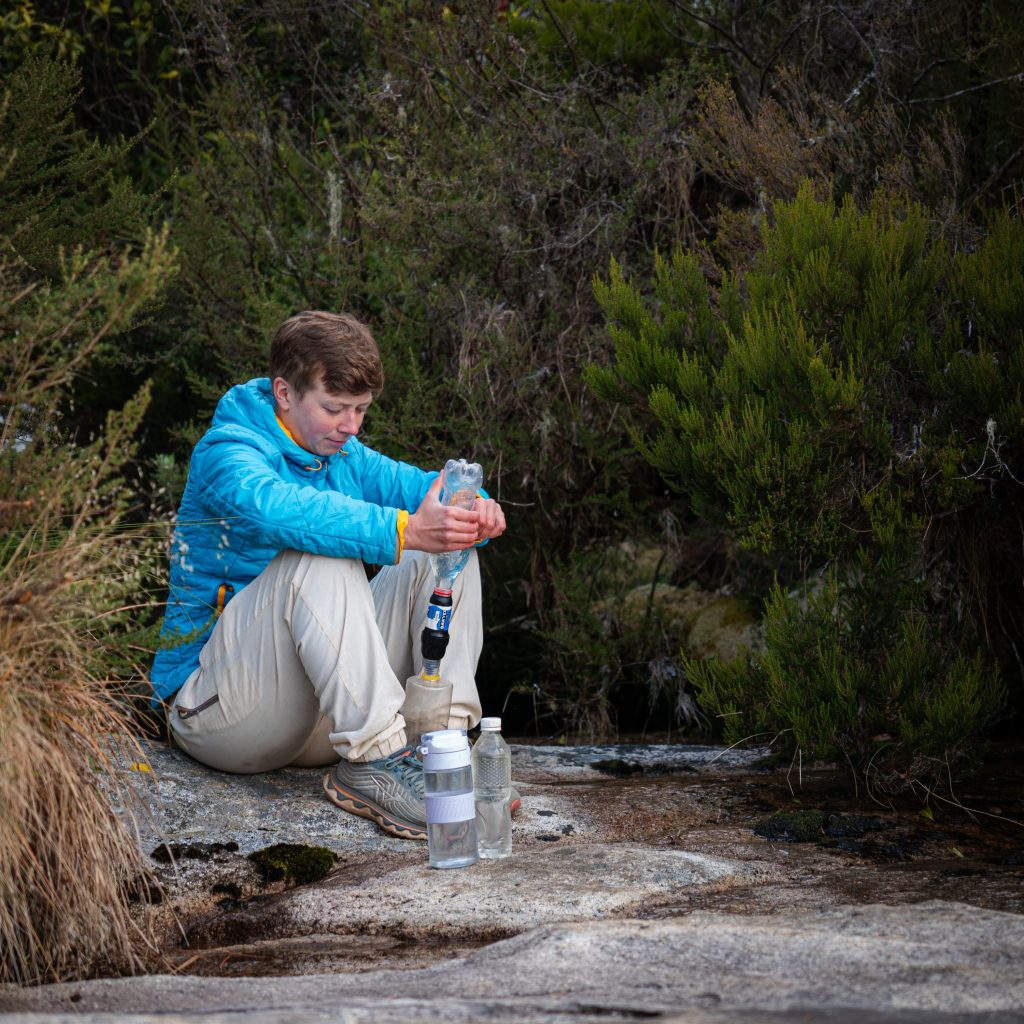
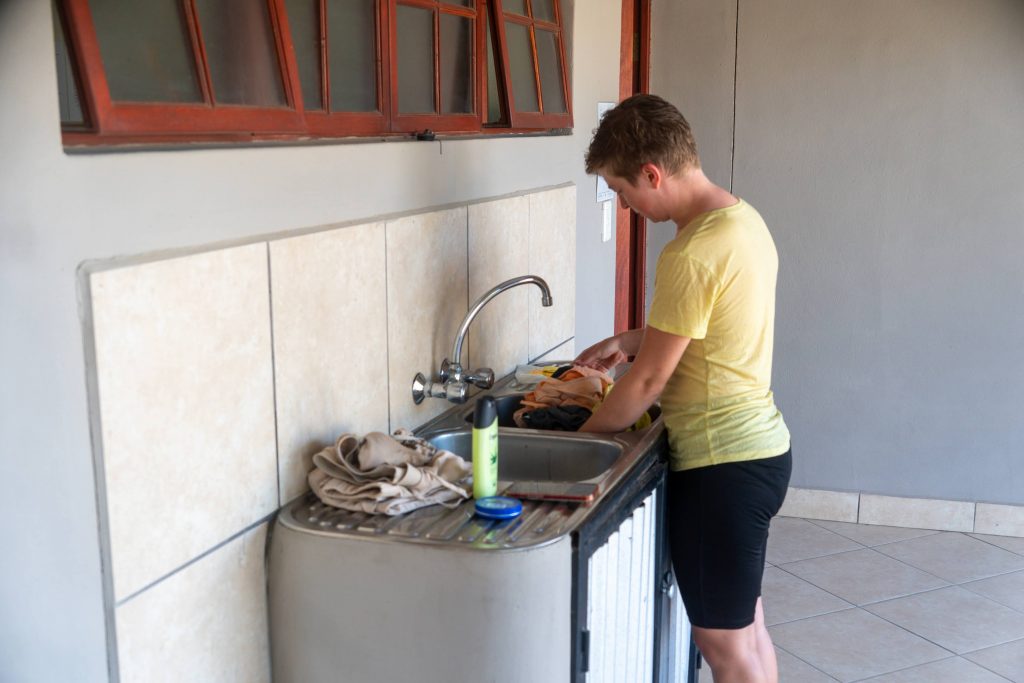
For East Africa we used our Sawyer Squeeze filter with tap water from guesthouses, it became one of those daily afternoon chores, along with rinsing out our sweaty cycling clothes in the sink. Only very rarely did we need to get water from a village well. Once we got to Namibia there were some places where the water was very saline or had a rusty taste that was too much for us, and there we did buy bottled water. We took purification tablets but didn’t use any of them.




Clothing
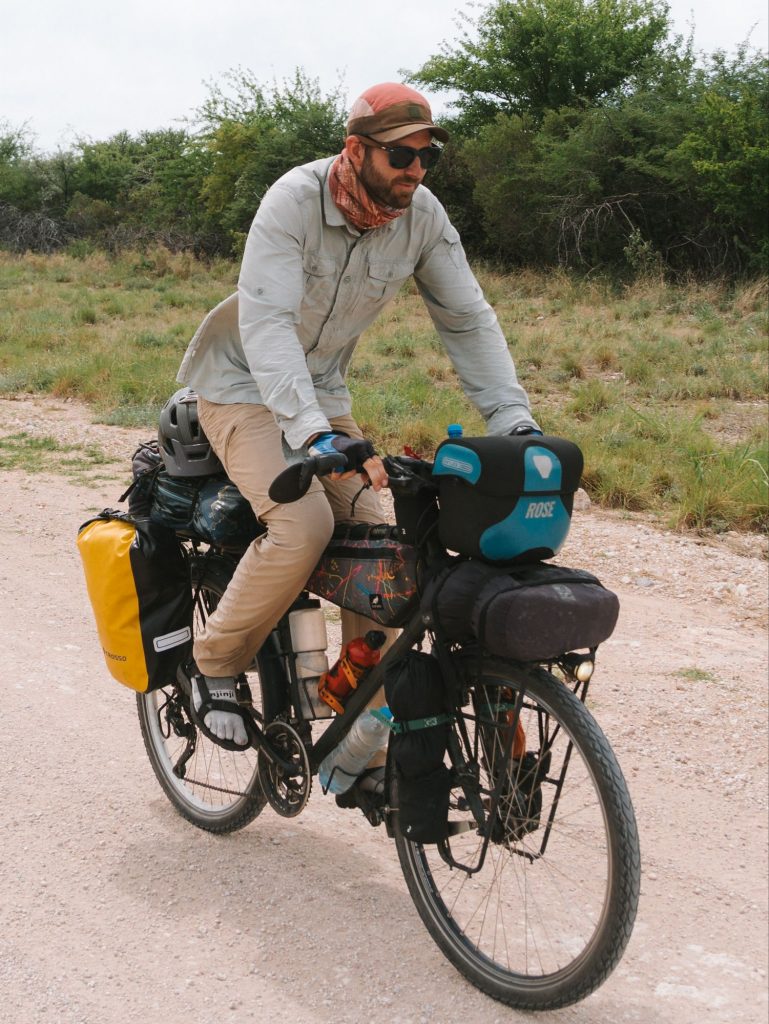
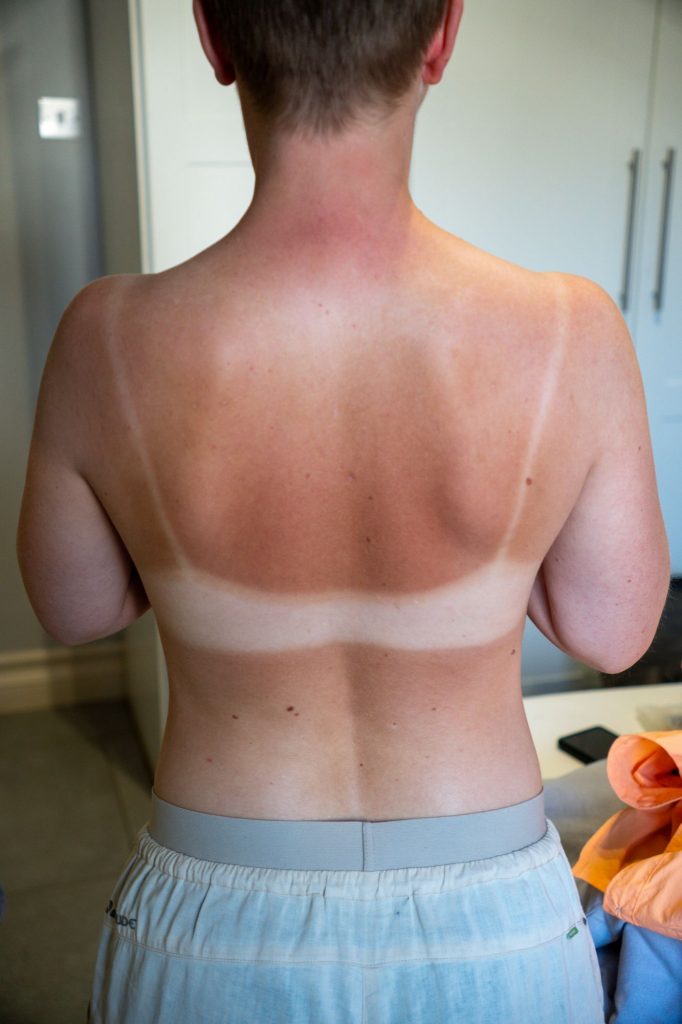
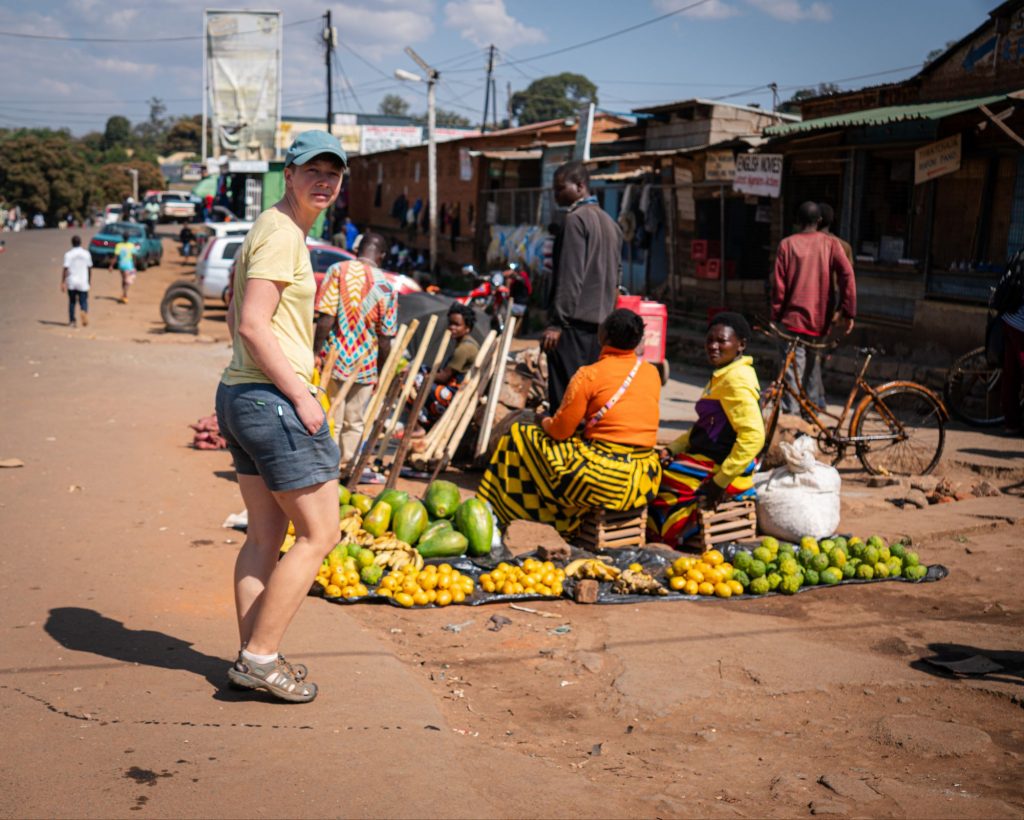
Ben thought he’d be wearing shorts most of the time (the same as one his hikes) but after an hour or so in the sun leaving Nairobi it was clear that his skin is just too pale for this. From then on it was dorky zip/off trousers, a long sleeved nylon hiking shirt and the forever fashionable socks and sandals. Shoes were too sweaty to cycle in (and then stank awfully), and sandals alone would have been too much sun exposure, and would have lead to dry foot issues.
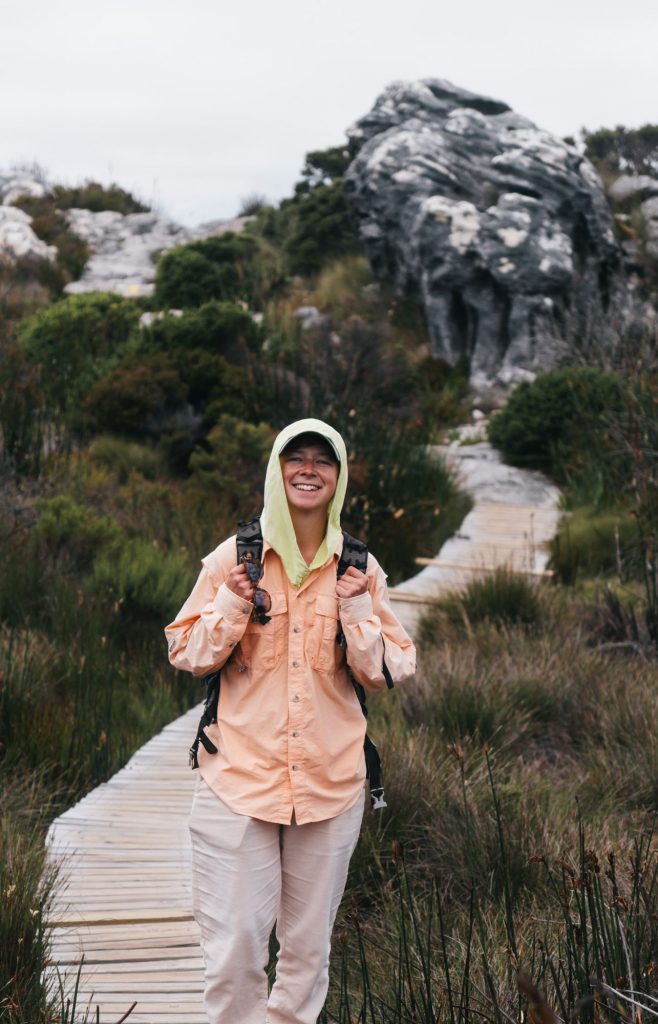
Lina wore long thin hemp/polyester trousers which she absolutely loved. The only downside being the light colour meant some unfortunate brown saddle marks. On top she wore a polyester sun hoodie for most of the way. Despite being designed for sun protection, too much UV was coming through the “sun hoodie” and Lina then switched to a rather unflattering mens fishing shirt, but at least it provided enough UV protection.
We both had one set of cycling clothes and one set of off-bike clothes.
Luxuries
Almost every day Lina commented on how happy she was with her chair (Helinox Chair Zero), made all the sweeter by Ben only having a tiny little stool. If we were doing a trip like this again we’d definitely both get real chairs.
Before the trip started, I (Ben) was unsure if I could keep up the sketching, so was pleasantly surprised to have filled up 2 sketchbooks. One of my projects after settling in a new place will be to figure out how to nicely photograph the sketches and paintings. So once the sketchbooks have been digitised, they’ll be shared in another blog post. Similarly with photography, I enjoyed taking pictures of the trip so much that when one camera was ruined in a capsizing, I needed to get a replacement sent out.
Some things we dropped along the way
- Bluetooth Keyboard – we thought it might be a real pain to type out long blog posts on a small phone screen. It turns out it’s a bigger challenge to find a stable surface to rest a small keyboard on.
- Camera Tripod – Whilst it would have been nice for steadier night sky shots, we weren’t taking as much time to stop and take photos of the both of us as we thought before hand. Once we were actually out cycling it felt like too much of a drain on energy to stop, setup the camera, ride back and cycle through. Maybe an even smaller tripod next time.
- Steering Stabiliser – A spring that encourages the front wheel to stay straight. With so much weight on the front of the bike this spring becomes rather ineffectual.
- Lighter – matches are just smaller, cheaper and lighter.
Overall
Overall I think we took a good amount of stuff. We met cyclists with both much heavier and much lighter setups, but our balance worked well for us, as I’m sure theirs did for them. We did receive some comments that people were surprised we didn’t have more luggage, so it’s nice that our efforts to keep the weight down were noticed. Let us know if you have any other questions about we may or may not have brought along.
Will I be cycling across Africa? No. Did I read the entire blog and enjoy all of the information? Yes😁
We still need to officially award our biggest fan 🏆
I’ve loved reading all your blogs and info and have lived vicariously through your adventures x
loved your emails! looking forward to the artwork pictures, they were a wonderful extra!